
by: Theo O. (Grade 11)
The coronavirus pandemic has triggered a set of events that have backtracked and modified many elements of contemporary lifestyle. The arts – a crucial part of human expression – was no exception.
Now, the film industry, of course, is no stranger to adversity. In many pivotal moments in history, movie theatres were forced to close, and productions were interrupted. Setbacks were caused by wars, economic recessions, and even previous pandemics.
The Spanish flu pandemic, which violently struck the world shortly after the end of World War One, caused many setbacks to an industry that was growing exponentially in many different countries. That was particularly true in the United States, where cinema, according to the Hollywood Reporter, was expected to become the fifth largest industry in all of the United States – only behind agriculture, coal, steel, and transportation.
Due to government-imposed lockdown restrictions, however, the progress of a medium estimated to be worth over 250 million dollars had it’s progress abruptly interrupted, causing rage amongst consumers and producers.
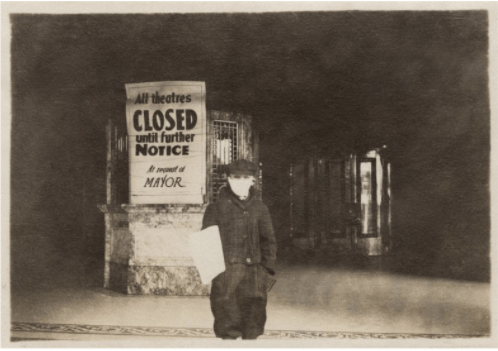
However, despite the temporary struggle, the film industry enjoyed a surprisingly dynamic recovery after the crisis – mainly because it was a booming young industry, with a lot of enthusiasm (and content) surrounding it.
In 2020, the consequences of the virus on the film industry are eerily similar to those in 1918 – it is estimated, in fact, that the industry (which is heavily set by box office numbers) will lose 160 billion dollars in the next five years.
Now, you may be wondering – since the problems are similar, will the film industry also enjoy a surprising recovery in the upcoming years, or maybe even months?
Well… maybe. But it will drastically contrast the events of the 1920s.
While it has already been established that the entertainment industry heavily relies on box office numbers, that has become less true over the last few years. Just recently, we’ve seen multiple films released on streaming platforms (such as Netflix and Amazon Prime) which have garnered international prominence, critical acclaim, and meaningful recognition from award ceremonies. Films such as Roma (2018) by Alfonso Cuaron, and The Irishman (2019) by Martin Scorsese, were able to impact culture and dictate public conversation, even though neither was ever released in theatres.
In 2020, the year of the pandemic, it is expected that award ceremonies will mainly focus on films released digitally, such as Mank (2020), and The Trial of the Chicago 7 (2020). Earlier this week, Warner Brothers announced that an extensive list of their 2021 releases will come out digitally on HBO MAX (their streaming service), simultaneously with a worldwide theatrical release.
While that has sparked outrage amongst some of the world’s most traditional filmmakers, such as Tenet (2020) director Christopher Nolan, and most pretentious cinephiles, such as myself, labelling these changes as a symptom (no pun intended) of the crash caused by the pandemic is misleading. Many of these changes were actually long-coming (as aforementioned) – they were simply amplified by unforeseen adversities.
While cinema moving away from a box office-driven industry may speed up it’s recovery process, the Hollywoods, Bollywoods and Nollywoods that will come out of this crisis will look drastically different compared to how they came in.
What have been your favourite movies of this year? Leave them in the comments below!
 The Halcyonite
Leave a comment