by: Cosmo V. (Grade 11)
Photo Source: L’Ecole Internationale Franco-Anglaise (EIFA)
Music has always been a part of my life. I am surrounded by musicians and artists in my family, and grew up with instruments placed in my hands, from the guitar to the recorder. It has always served as a source of comfort and inspiration, but also one of frustration, of dissatisfaction.
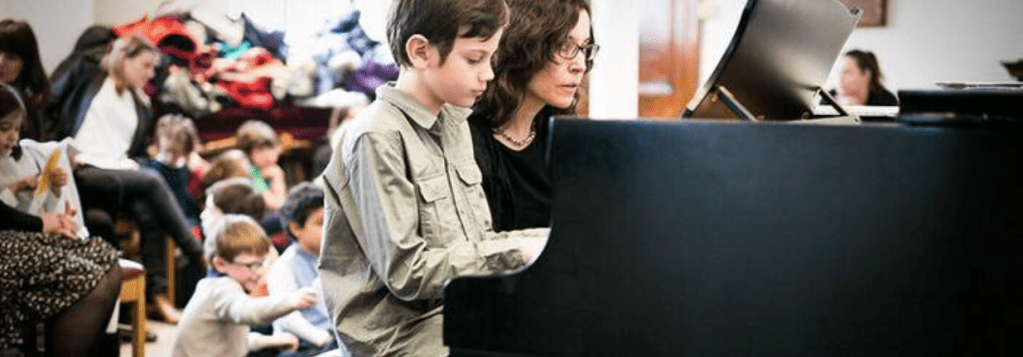
I have been playing the piano for over a decade, and in many ways have grown up with this instrument. I think that, without it, I would not be what I am today. The piano has brought me great insight into the power of building something on the longer term, and certainly on the power of grit. In my earlier days of lessons I would sit in front of a sheet of music, perplexed and overwhelmed, with the feeling of being incapable. The only ways through which I could surmount these dry-throated, blood-boiling, tear jerking moments of blockage, was by persevering; and with the help of my teachers, we would overcome this struggle. There have since, also, been moments of pure inspiration when playing the instrument. It really is its own entity, and learning to play it really is the process of looking in the mirror of the soul.
To digress from this introspection, I want to write a few things about the clear ways in which being musically inclined or being exposed to a musical education have acted as means to push me forward. The “musical ear” is not an absolute, as opposed to what is often suggested. A musical ear is something that can be learnt, and in any case, that can be developed. In fact, this can quite easily extend to finding perfect pitch, or more. To me, this musical ear, when worked on, can help with a plethora of challenges beyond the context of music. For me, these have included creative thinking and language acquisition. The ways in which you train your ears can mean that, similarly to how a Chameleon blends into the background, you might be able to perfectly replicate accents, dialects, or languages with relative ease. I recently saw the fruit of this when complimented for my fantastic Brazilian accent when speaking Portuguese (though I have never learnt Portuguese, nor travelled to Brazil). Beyond language, music helps the brain with abstract thought, as the acts of learning pieces, composing, and such things, all push forward a capacity to visualise concepts that it may be incredibly difficult for others to. I would go so far as to say that the principal source of genius is raw self-expression, and that music and the visual arts are very good means of doing this.

I want to add that music, from my experience at least, has not been simply to do with the sounds and instruments themselves, but actually with the environments and cultures that surround them. A piano isn’t just an array of hammers in a box, hitting a bunch of wires. It is also an insight into musical history, the subtle differences in instruments across genres, the approaches to music across cultures, and the associated musical genres (in the thousands). To gain fluency in an instrument is the first step in gaining a more holistic understanding of people’s relationships with music, and with one another through music. Finally, I firmly believe that learning an instrument is a serious challenge to take on; one that will likely be accompanied by rollercoasters of emotions, from the pits of despair to the hilltops of happiness, and an experience that will hopefully have underlying sentiments of passion and determination. Without the piano, I would likely not have been able to explore so many areas, from podcasting to finance.
Grit is the best road to success, and gaining a true understanding of a musical concept (microtones, progressions, harmony), of a genre, of a song, or of an instrument, is a grit-building experience that I believe every individual should be given the opportunity to have. Music, though an entity of its own standing, can be a tool to achieve personal success, and it should interest anyone open to the opportunities that come with cultural diversity, knowledge of history, creative expression, people, and so much more, which area all byproducts of music.
Do you play an instrument? Do you agree with Cosmo? Let us know in the comments below!
 The Halcyonite
Leave a comment