By Felix, 25′
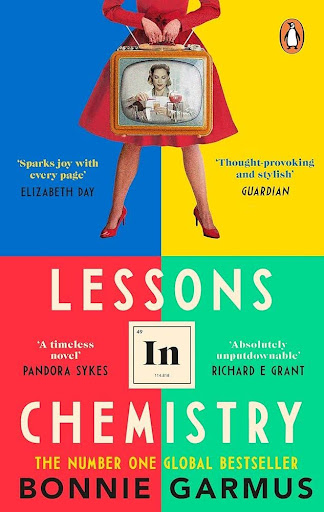
Bonnie Garmus’s “Lessons in Chemistry” has flawlessly transitioned from the captivating pages of her highly acclaimed book to the visual medium of a celebrated show, available for free on AppleTV. Having discovered the book as one of my favourites last year, I eagerly anticipated how the narrative would be brought to life on screen. Its adaptation into a period drama has not only maintained the essence of the story but also received noteworthy acclaim, reflected in impressive scores on IMDb and Rotten Tomatoes. In this review, we delve into a concise comparison between the literary and cinematic experiences, exploring how the essence of the feminist storytelling and the 1950s setting, along with a glimpse into the plot and the main character, translates from the page to the screen.
The book version of “Lessons in Chemistry” received stellar reviews, earning a perfect 5/5 rating on Waterstones and an impressive 4.6 stars on Amazon UK. Authored by Bonnie Garmus, the novel masterfully blends historical fiction, humour, tragicomedy, and humorous fiction, while also being a powerful feminist narrative. The story is set in the 1950s and revolves around Elizabeth Zott, a brilliant chemist turned unlikely television sensation, challenging societal norms with her wit and intellect. Garmus’s storytelling prowess and the depth of character development contribute to the book’s success, making it a literary gem with a strong feminist undertone.
The televised adaptation of “Lessons in Chemistry” has been met with acclaim, with an IMDb score of 8.3 out of 10 and an 85% approval rating on Rotten Tomatoes. The transition from page to screen seems to have been handled with finesse, capturing the nuances of the period drama genre and the feminist storytelling inherent in the narrative. The visual medium allows for a different but equally immersive experience, bringing the characters, the 1950s setting, and the feminist undertones to life in a way that resonates with audiences.
Both the book and the show maintain a strong connection to the essence of the feminist storytelling set against the backdrop of the 1950s. The period drama genre, showcased in the show, complements the historical and humorous elements present in the novel. While the book allows readers to dive deep into the characters’ inner thoughts and reflections, the show excels in visually depicting the era and the protagonist, Elizabeth Zott’s, journey. The adaptation manages to preserve the heart of Garmus’s narrative while offering a fresh perspective through the lens of cinematic storytelling, emphasising the empowering and feminist nature of the story, but in exchange for a few specific details of time.
In conclusion, “Lessons in Chemistry” proves to be a rare gem that successfully transitions from the written word to the screen. Whether experienced through the pages of the book or the frames of the show, the narrative’s richness, charm, and feminist storytelling captivate audiences, solidifying its status as a compelling piece of historical fiction with a strong emphasis on gender dynamics in the 1950s.
 The Halcyonite
Leave a comment