By Annabel 28′
Every year, Congress, the U.S. government’s lawmakers, must agree on a budget. This budget decides how much money is spent on everything from national parks to scientific research to paying federal employees. When lawmakers cannot agree by the deadline, the government does not have the permission to spend money. That is when a “government shutdown” happens.
It sounds dramatic, and in many ways, it is. The United States has the largest economy in the world. When parts of its government stop working, the effects can be felt both inside the country and internationally.
What actually shuts down?
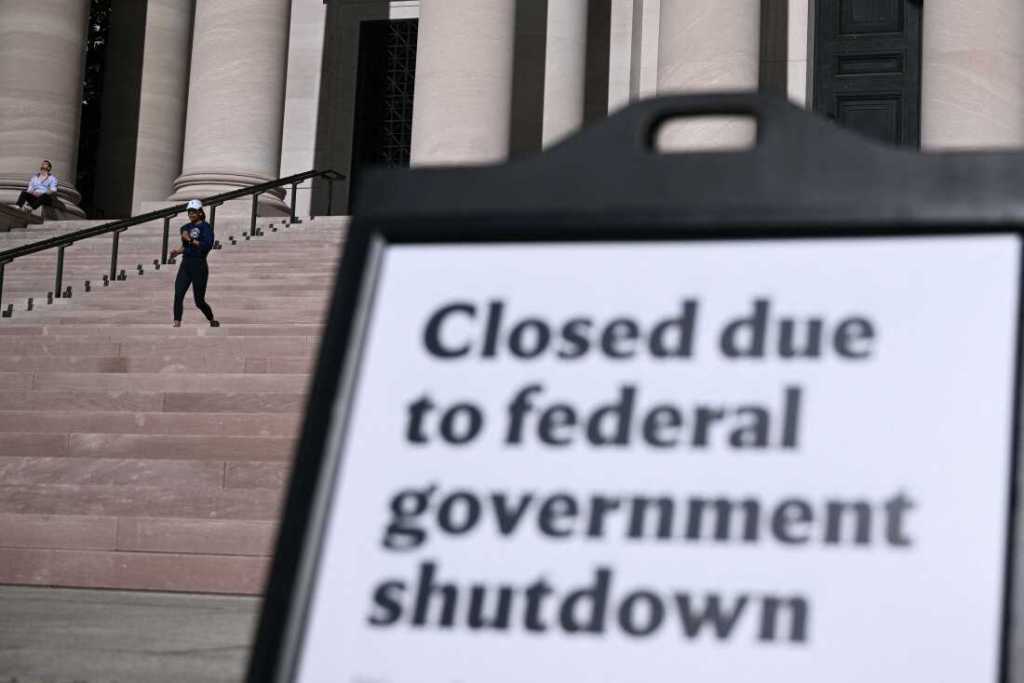
Not every part of the government stops working. Some services, like the military, air traffic control, and hospital care for veterans, continue because they are considered essential. However, many other services close or shut down, such as…
- National parks and museums may close.
- Government offices that issue passports and visas can face long delays.
- Thousands of federal employees are told not to come to work, while others must continue working without pay until the shutdown ends.
These workers include park rangers, security staff or even scientists. They still have rent to pay and families to support, so a shutdown quickly becomes personal.
Why does this happen?
At its core, a shutdown is about political disagreement. Lawmakers argue over how to spend money on topics such as whether money should go to the military, healthcare, schools, and/or other priorities. Sometimes the debates are about specific policies that one side refuses to fund. When compromise breaks down, no budget passes, and the government runs out of authority to keep paying many of its activities.
It’s a little like a school council being given money for clubs and events. If the members cannot agree on whether to spend it on sports or music, then nothing gets approved. The money is there, but no one is allowed to use it.
How does it affect ordinary Americans?
For the people living through it, a shutdown often means stress and uncertainty. Federal workers may go weeks without pay, even if they are required to keep working. Families waiting on government services like student loans, housing support, or passport approvals can face delays that disrupt their plans. Communities near closed parks or museums can lose tourism income. Even people who never deal directly with the government may feel the effects if businesses slow down or security in the economy weakens.
And what about other countries?
The United States is closely tied to the global economy. A shutdown makes investors and other governments uncertain about whether America’s political system can function smoothly. That uncertainty can affect trade agreements, stock markets, and international projects that depend on U.S. cooperation. In short, the rest of the world notices when the U.S. government cannot reach agreement.
Why should students care?
Government shutdowns may feel distant, but they reveal how decisions made by lawmakers eventually affect everyone. Students applying for college loans, families planning trips, or friends waiting for exchange programs can all be impacted. Understanding how the budget works is also a reminder that voting participation really does shape daily life.
Overall, a government shutdown is not just an irrelevant news story. It affects people’s lives in ways that are frustrating and stressful, from paychecks being delayed to travel plans getting stuck. It also reminds us that governments only work when leaders are willing to meet in the middle. For students, it is a chance to see how decisions can shape everyday life, and why being engaged in those decisions matter.
Bibliography
Steedman, Elissa, and Brad Ryan. “The US Government Shutdown Has Begun. Here’s What That Means.” Abc.net.au, ABC News, 30 Sept. 2025, http://www.abc.net.au/news/2025-10-01/trump-us-government-shutdown-explained/105835552. Accessed 21 Oct. 2025.
The NPR Network. “The Federal Government Is Still Shut Down. Here’s What That Means across the Country.” NPR, 15 Oct. 2025, http://www.npr.org/2025/10/15/nx-s1-5575134/government-shutdown.
Zurcher, Anthony, and James FitzGerald. “Why Has the US Government Shut down and What Does It Mean?” BBC News, 29 Sept. 2025, http://www.bbc.co.uk/news/articles/crrj1znp0pyo.

 The Halcyonite
Leave a comment